Thursday, September 07, 2006

Pudhcha Varshi Lavkar Ya


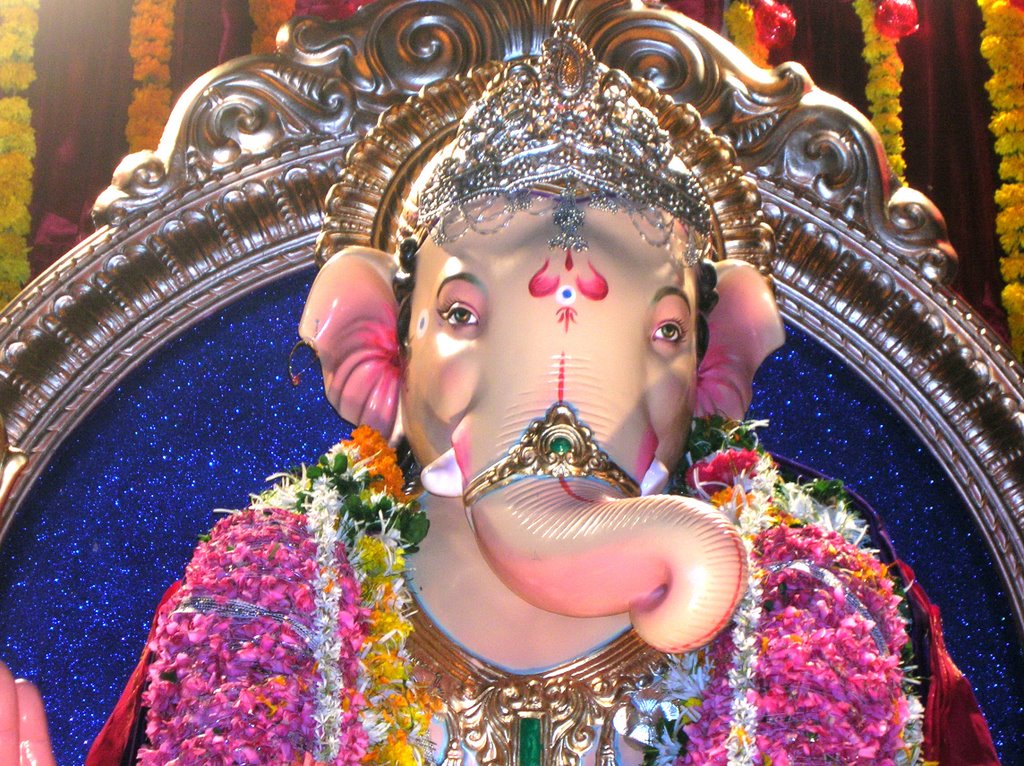
There must be no other day when Mumbai’s streets are thronged with so many people as I saw yesterday on Anant Chaturdashi, the visarjan day when Ganpati is immersed into the sea at various places like Girgaum, Juhu, Shivaji Park, Versova and also in various water bodies(lakes,ponds and wells) in Mumbai.

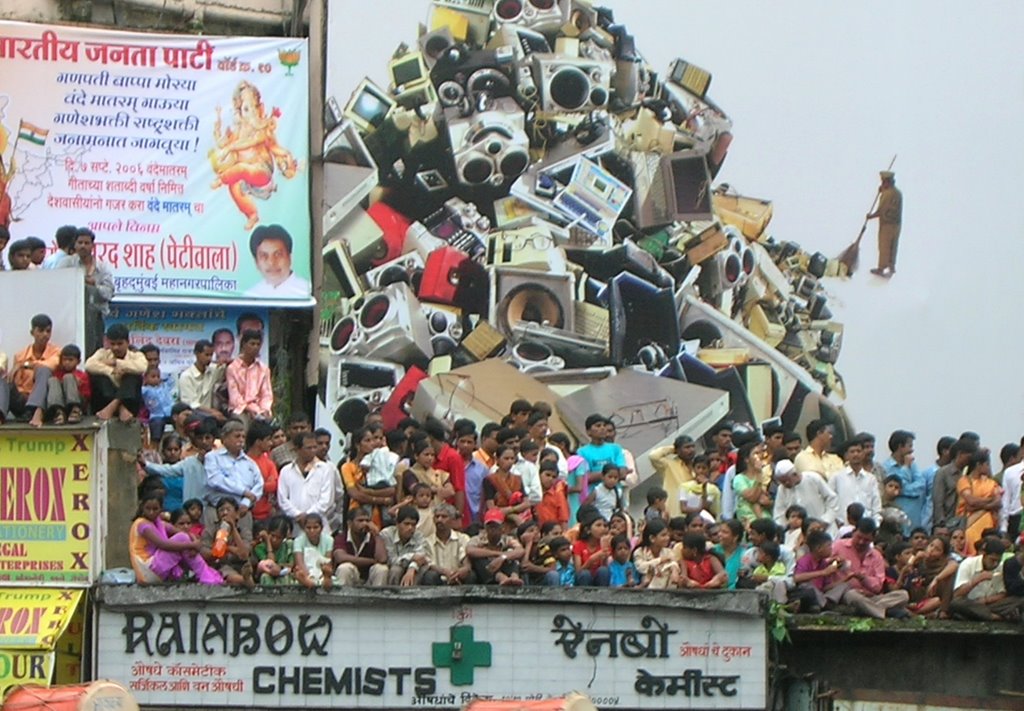
I was standing in the midst of lakhs of people at Girgaum Chowpatty who were either a part of the visarjan procession or like me watching the Ganpatis pass by. Women, men, children, young and old people, some of them drunk were either dancing away in the din as a part of the procession heading towards the beach or standing or sitting on whatever space was available… footpaths, dividers, roads, building walls, rooftops of terraces and shops.. on or in any vacant space available. One foreigner was dressed for the occasion and was wearing a Ganpati shirt.
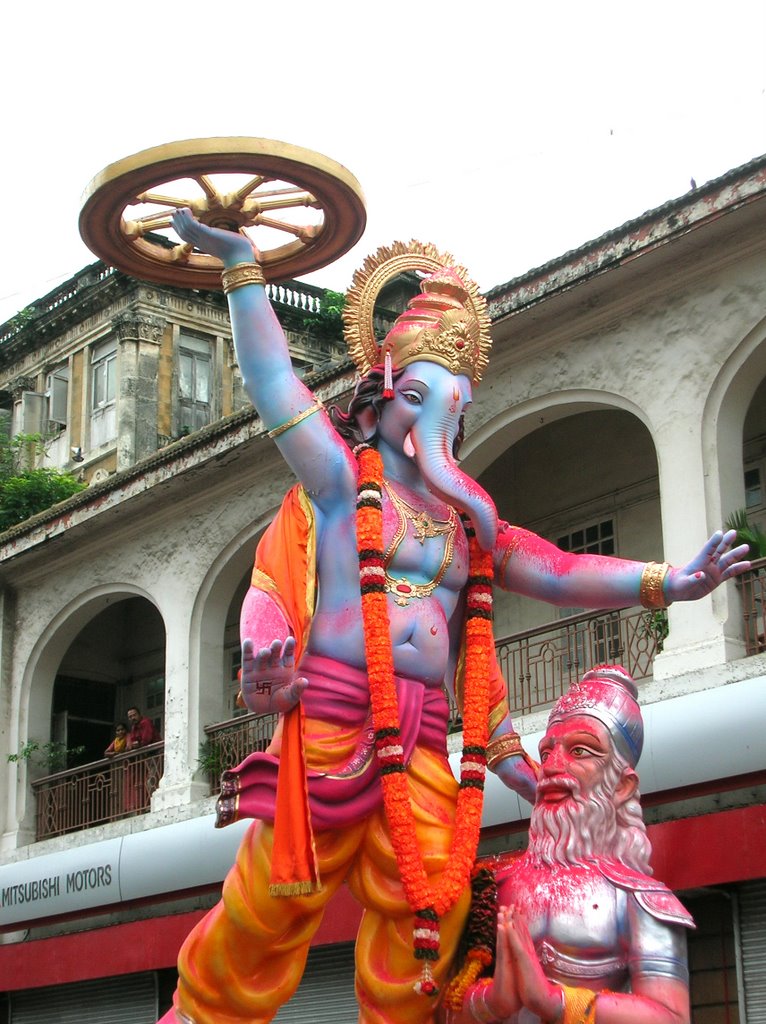
The Ganpatis came in all sizes and colors. There were small, medium and big Ganpatis. There were household, wadi, building, galli and area sarvajanik Ganpatis. There were white, blue, silver, golden and yellow Ganpatis. There were rajas and maharajas. (The most prestigious Ganpati in a particular area is suffixed with a raja or maharaja like Lalbagcha Raja or Girgaumcha Maharaja). There were lone Ganpatis or Ganpatis with accompanying gods and goddesses. There were Ganpatis being carried in hand carts, carts, tempos, cars, jeeps, trucks and the really huge ones were being pulled on manual trolleys by the people itself. There were Ganpatis from Agripada, from Khetwadi, from Girgaum and from Lalbaug. There were Ganpatis from Sutar Galli and from Satta Galli, from Dhobi Talao and from Chinchpokli. Well, they were coming in from all directions and from all over Bombay.

I walked to Girgaum Chowpatty which is just a kilometer away from my house. The traffic was being diverted onto different routes. Many roads were closed or made one-way. Many offices had declared a holiday and those that were open would have left their employees early. All along the route, various political parties had put up stalls and were offering sharbat, water, cold drinks and even laddoos for the people who were dancing in the procession. Each group had the Ganpati generally in the front followed by the people dancing to different tunes of Bollywood numbers, Ganpati songs in Marathi or to the sound of dholaks and drums. They were bursting firecrackers, throwing gulal or even spraying confetti from cans which looking like shaving foam cans. One group danced to the traditional Marathi dance form of Lezim.
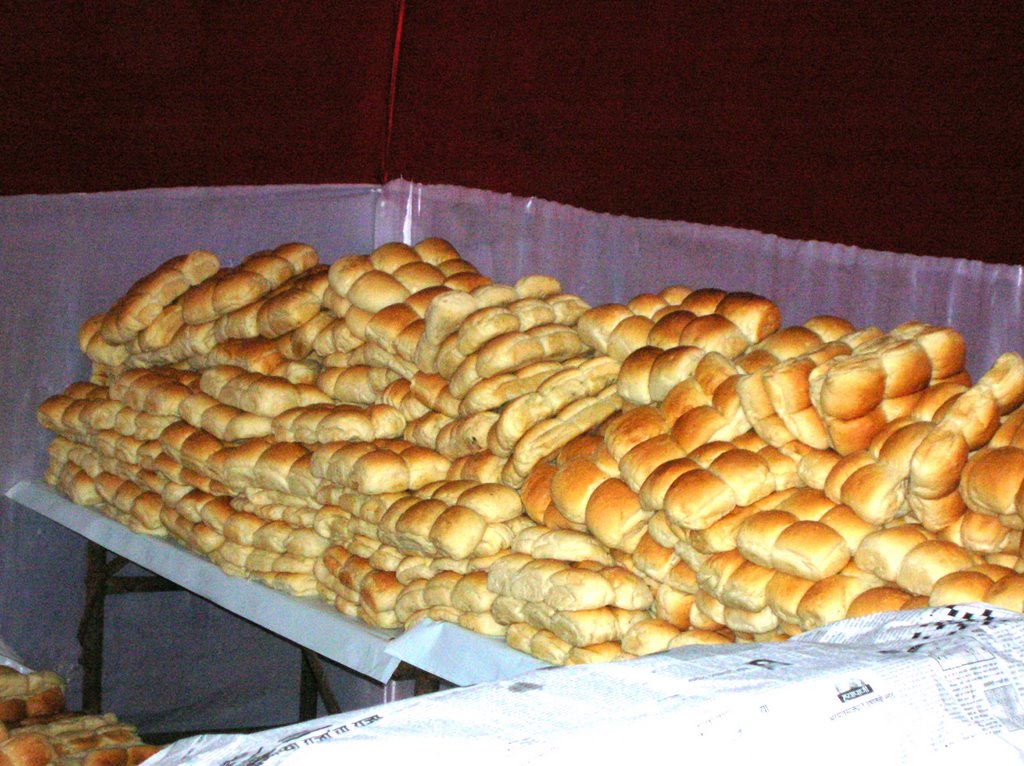
Visarjan also brought out ‘entrepreneurs’ selling foodstuff all along the route. Yesterday there must have been some kind of Guinness book record set of the most number of ‘wada pavs’ being sold in Bombay. One of the guys selling wadas at the corner of Nana Chowk told me that he would sell at least thousand wadas till 6 am in the morning. There were enterprising homemakers also selling wada and bhaji pav along with the regular vendors of dosa, dabeli, sev-puri, pani puri etc. Most of the places to eat out at Chowpatty were closed.
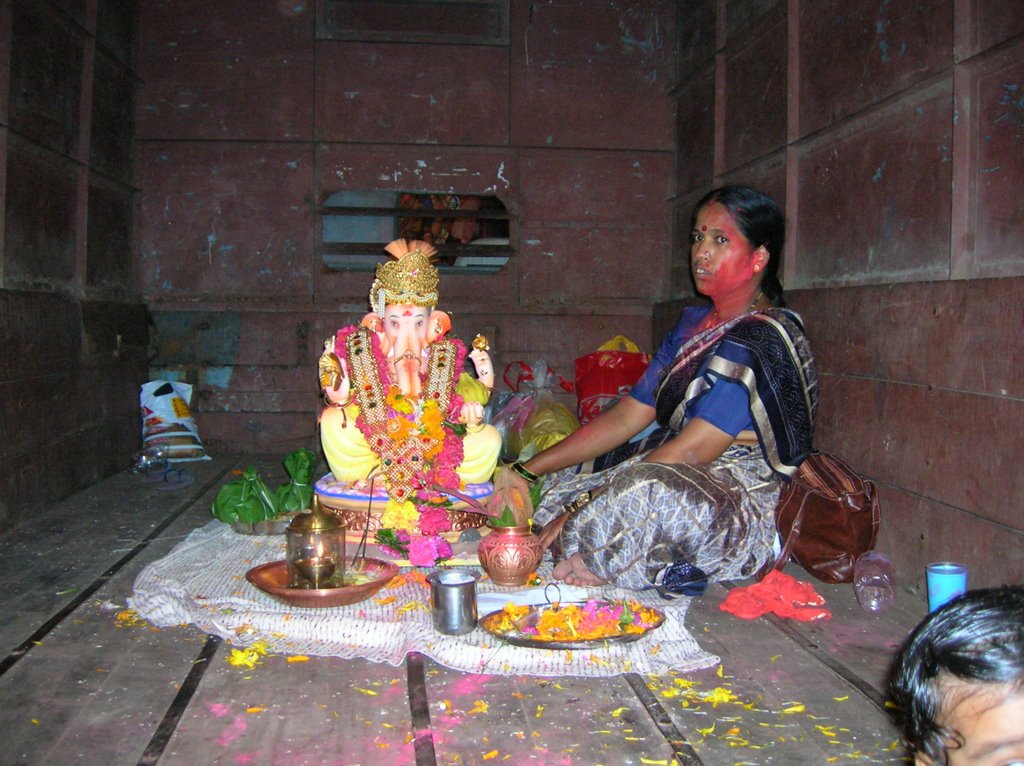
We thought that the best way to go to the beach was to be part of a Ganpati procession. So we joined a group which had a medium sized Ganpati. Each group had people holding a thick rope tied in front and back of the truck, which encompassed and thus protected and segregated their group from the rest of the crowd. The beach had lakhs of people who were either going towards the sea immersing the idol they had come with, standing or sitting around watching the idols go into the sea or going back after immersing the idol they had come with through a long drawn exit which came out opposite Wilson college. If one looked towards the sea one could see many idols at different distances being immersed in a sea of humanity.

There also were VIP viewing galleries, which had some politicians and foreigners with garlands, various stalls with a First-Aid facility, Announcement booths, May I Help You booths and toilets. One could hear announcements of “ Chotya mulancha haat pakda’ – Hold your small child’s hand, Chala chala pudhe chala – Go on, walk ahead or - “Yeto aahe ata Girgaumcha Maharaja”- indicating which Ganpati was about to pass by next.

The police and the security that one saw were unprecedented. They were all over the place. Volunteers were helping out in the water distribution stalls. The Traffic police, Mumbai police, riot control police, Senior citizen volunteers, NCC and volunteers from an organisation called the Anirudh Institute Of Disaster Management were handling traffic and crowd management excellently. It is said that the traffic management is so good on visarjan day you would have taken less time to drive through Marine Drive yesterday than on a normal working day. One also spotted the Municipal Commissioner, Johnny Joseph, Police Commissioner A.N Roy, Chief minister, Vilasrao Deshmukh and other ministers at Girgaum Chowpatty.

I did not wait till the Lalbagcha Raja arrived at 3 am but I am sure that there would have been a lot of cleaning to be done at Chowpatty on the next day when the crowds had disappeared and all the Ganpatis had been immersed.

Friday, September 01, 2006

Trivandrum's Street Tea Vendors

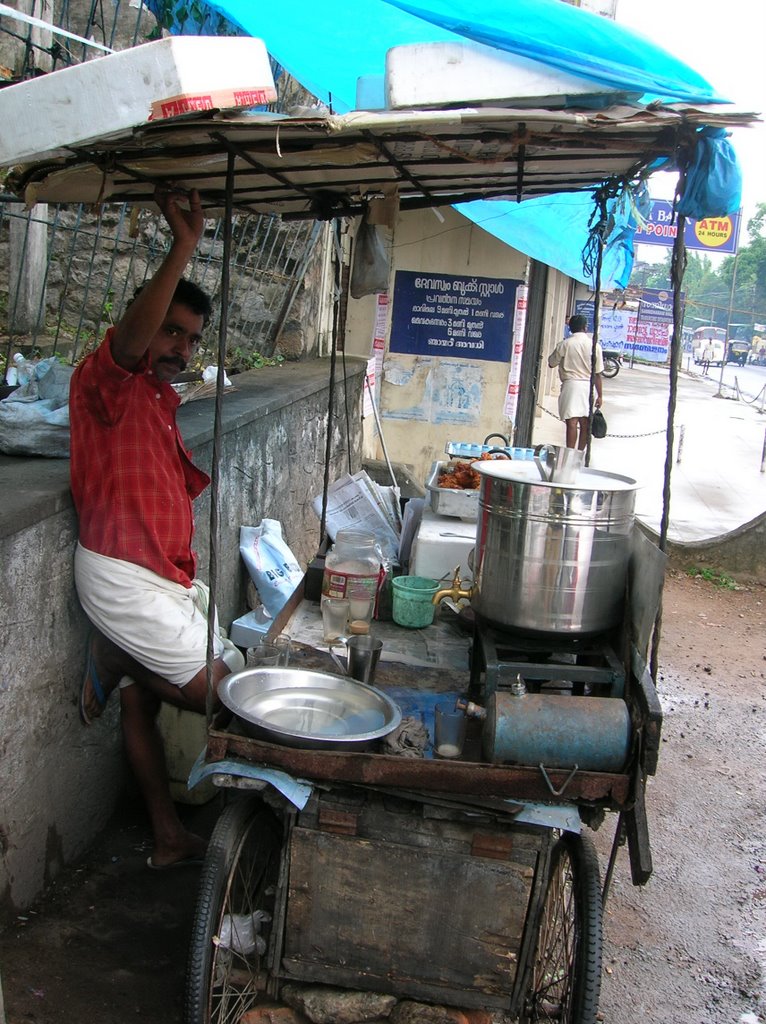
Thought that I would get coffee when I approached this beverage seller near the main Trivandrum railway station and I was pleasantly surprised to see that he was making tea. I was even more delighted at his ingenious way of making it.
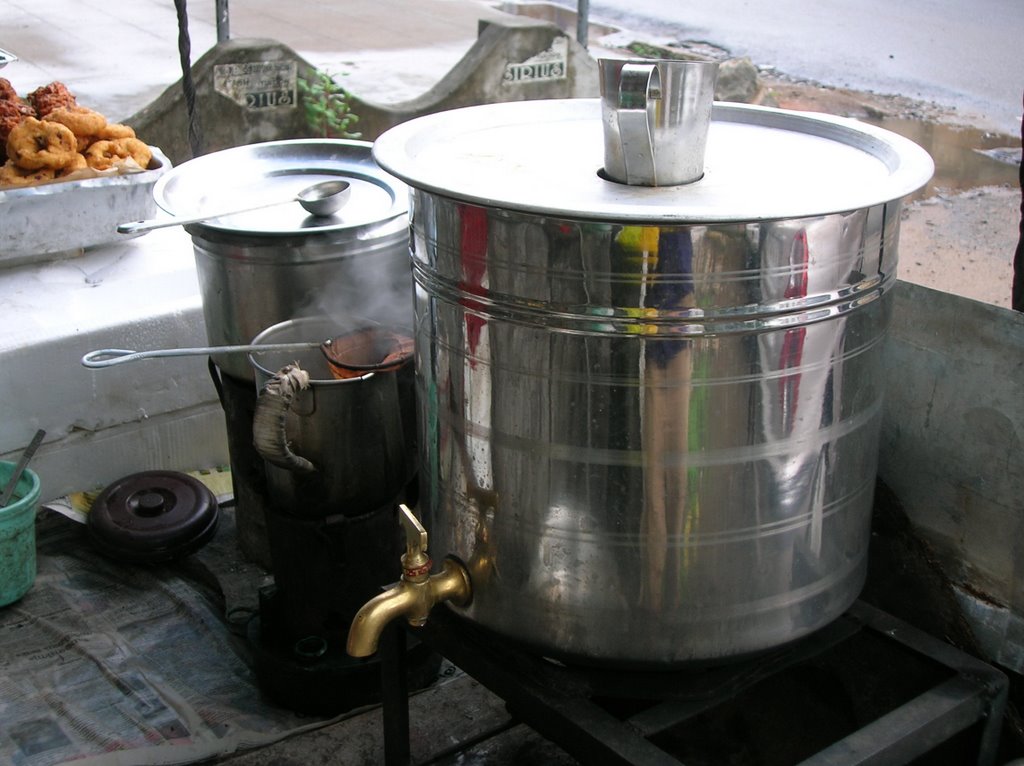
He had a kerosene stove on which he had placed a large stainless steel (others had brass) vessel with a tap at the bottom (more like a vessel which one uses for storing water). This vessel had another vessel inside it. This the large vessel underneath stored the hot water and also acted as a double boiler for the small vessel which stored the milk. The lid also had a small hole, which kept a conical shaped stainless steel vessel, which contained the tea infusion. So when you wanted tea he would put a little of the infusion through a sock shaped muslin, add sugar and milk and then open the tap to pour the hot water into a glass and voila the tea was ready.
I have seen them make tea in a similar fashion in Bombay’s Irani cafés but they use different vessels for the hot water and milk unlike the all-in-one container used by the street tea makers in Trivandrum.

24 hours in Trivandrum

Kerala was always one of my top 5 destinations to visit in India. Earlier this month, I went to Trivandrum for some animal related work and though the stay was short but sweet, I promised myself that I would go back. My 24 hours in Trivandrum left the following impressions.

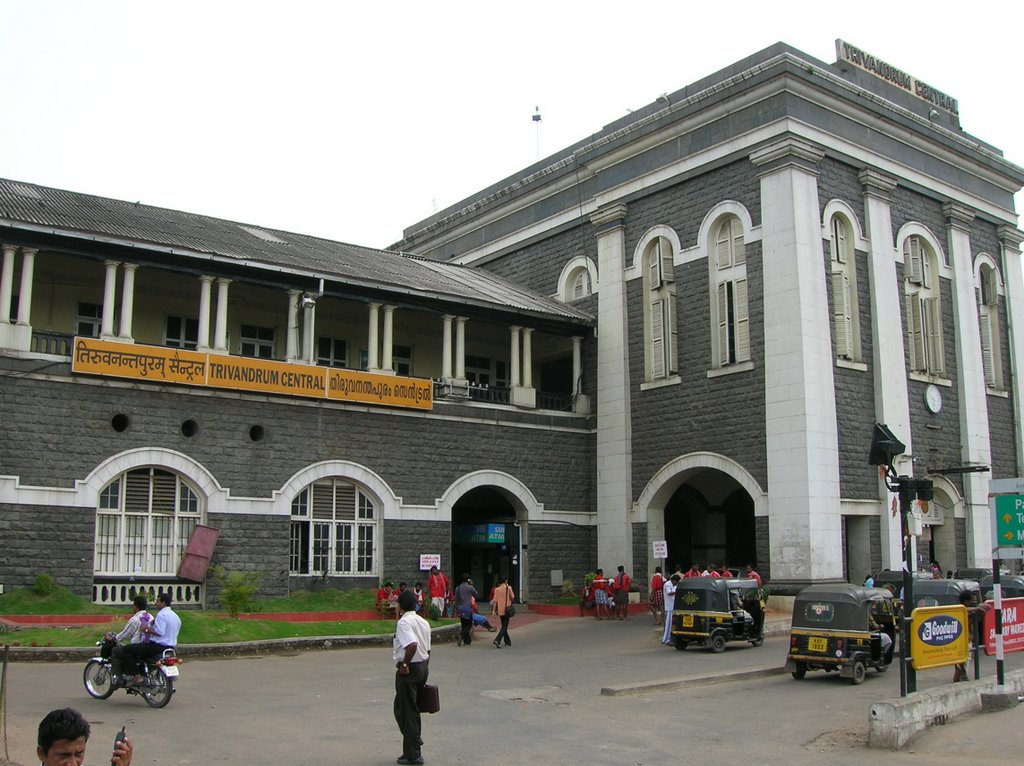
I got out of the airport and planned to take a bus to town when a very friendly rickshawala told me that he would reach me to a good hotel in Rs 50 and after some bargaining settled for Rs 30. The hotel was a foot away from the railway track and I decided to look for another one, as I did not want to stay awake all night, I decided to look for another one. My rickshawala was still waiting and he told me that he would take me to another one for “no charge”. So finally, I checked myself into Hotel Venkateshwara, which had a small but clean room and bathroom and was close to the railway station and bus stand.

Trivandrum or Thiruvananthapuram as it is now known is a small and relatively green city but like all developing Indian cities, it is losing its traditional architectural beauty with the Mangalore tiled houses giving way to modern buildings and shopping complexes. As I moved away from the city towards the suburbs, it became greener with lots of coconut trees, small houses with Mangalore tiled roofs and I also passed a small river surrounded by dense vegetation.

The Trivandrum that I explored was only to be after 10 pm and before 9 am the next day. I think the best way to explore and absorb a city is to walk around (stray around) or use the public transport. I walked from my hotel which was near the railway station via M G Road through almost half of Trivandrum in areas like Thampanoor, Chalai Market, East Fort, Bakery Junction, Statue (yes, it’s just called Statue), Kowdiar Palace and so on. I am sure all these names have some history attached that I don’t know of. On my way back, I took a KSRTC bus and the conductor was very helpful to tell me which was the bus stop nearest to my hotel. I of course, did not get to see the places that tourists to Trivandrum would visit like Kovalam beach, Napier Museum in the zoo , Sree Padmanabha Swamy Temple, Sri Chitra Art Gallery (houses a rich collection of paintings of Raja Ravi Varma) and the East Fort. I managed to take a picture of the old gate of the East Fort from the rickshaw)

I did not get to taste a lot of the delicious Keralite Cuisine because of my short stay but managed to grab a dosa with fresh coconut chutney and delicious sambar at Rs 6 and filter coffee at Rs 3.50 at a Hotel Aryas which I later discovered was a chain of restaurants all over Trivandrum (maybe like the Kamats in Bombay). Also had a Kerala parota with vegetable kuruma (yes, spelt that way). Missed out having appams, idiappams and veg stew.

I had always thought that all South Indians were coffee drinkers and when I saw a ‘tapri’ (I am sure it’s not called that in Trivandrum) on the footpath selling a hot beverage, I went and asked the guy for a coffee. I was surprised when he said that he had tea and not coffee. He was also selling some wadas on the side (medu wadas and banana bhajiyas). It was a pleasure to see the ingenious way he made the tea. There were several such tea sellers at every street corner all over Trivandrum.

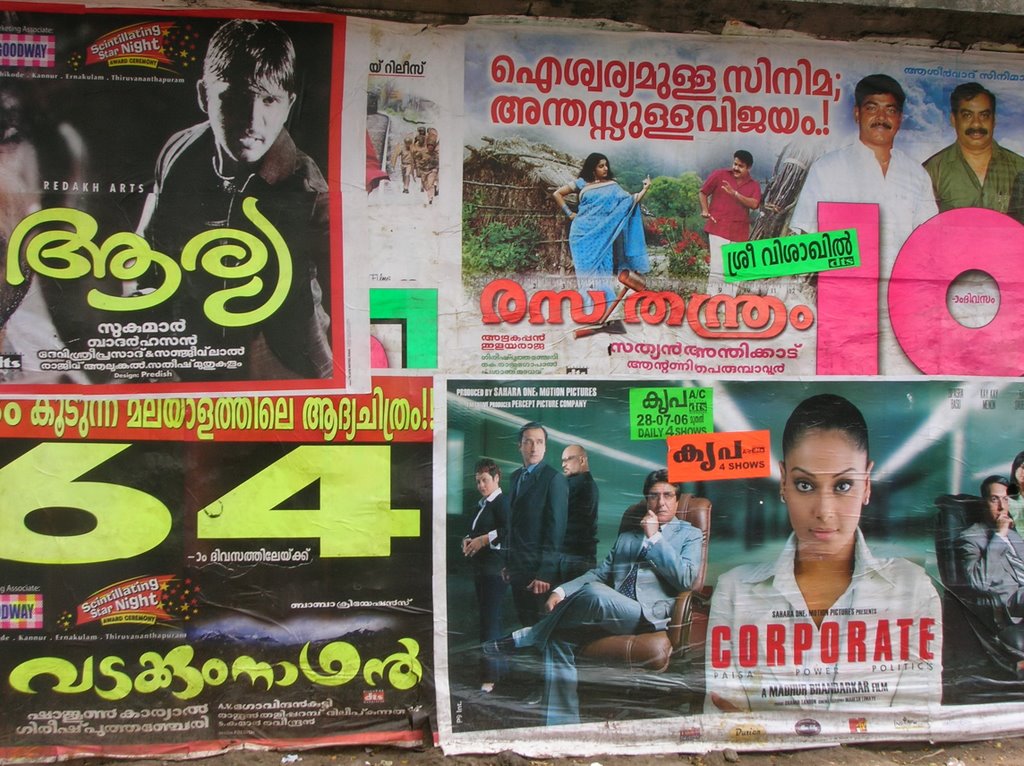
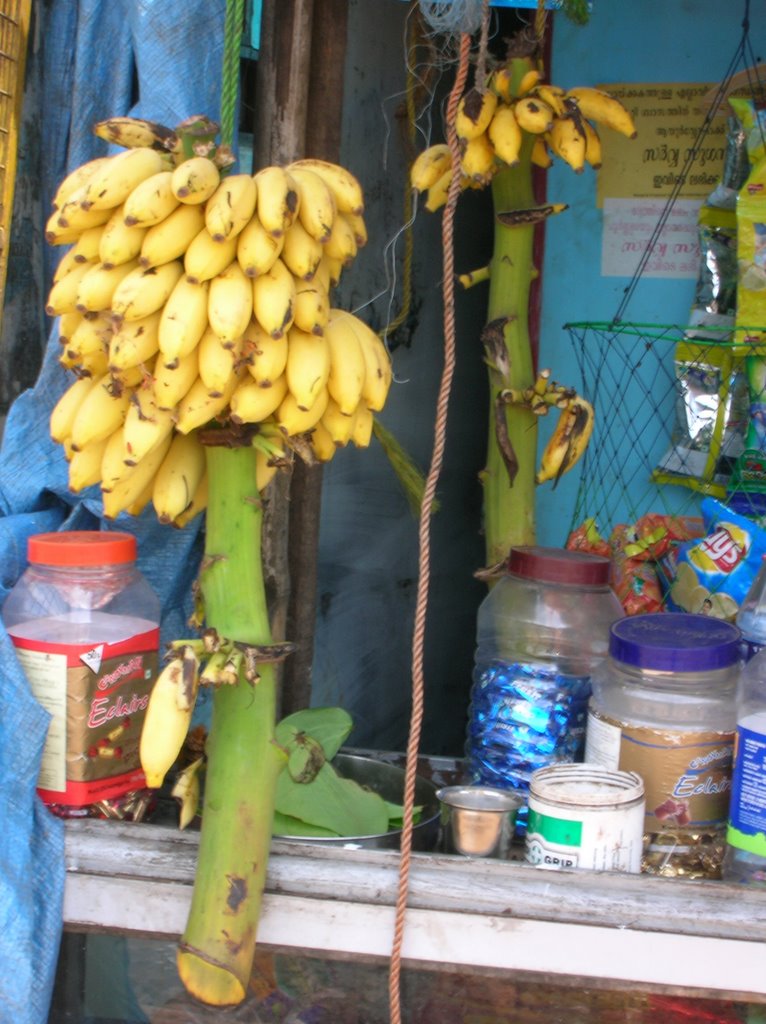
Some of the striking features in Trivandrum were as follows …. Newspaper stands and book shops being sold all over (Kerala being the most literate state in India) , lottery tickets being sold on the street and in mobile vans (one guy was selling them in a Maruti Omni while continuously announcing something in Malayalam over the loudspeaker tied to the Omni’s roof), Bananas (yellow, green and red) hung outside all shops irrespective of what they were selling, Hindi, Malayalam and English film posters stuck on walls, beautiful multi-colored temples all over reminding me of the temples in Chembur & Matunga, Meals Ready signs in Malayalam and English outside eating joints and of course banana, jackfruit and tapioca chips being fried in huge kadai and sold fresh.

I left Trivandum after drinking MAA at the airport – a darker Appy like apple juice served in a tetrapack and resolved to go back to Kerala as a tourist so that I could stray around much more.

Tuesday, August 29, 2006

Govinda Ala Re

The title of this piece is deceptive as Govinda has already ‘yevun gela re’ as it has been almost two weeks since Gokulashtami was here. Nevertheless, better late than never. These photos were taken while I was passing through Shivaji Park. The group was trying to make an eight-tiered human pyramid but fell as they were onto the sixth tier. Here are some photos I took tier by tier.


and then they all fell down....

Tuesday, August 15, 2006

Independence Day in Bombay

On India’s 59th Independence Day, Mumbai wore a tri-colored look and people everywhere were celebrating Independence Day in their own way. Walking down the vegetable market near my house, all the vegetable vendors had put up flags which were either tied to their stall or even stuck into the tomatoes or potatoes that they were selling. Many street children were selling flags of all shapes and sizes. Unfortunately for some years now, plastic flags have come into the market in a big way.

Ahead, outside Grant Road station, many people including senior citizens from the area had gathered for a flag hoisting ceremony. Many people had worn Gandhi topis and a politician came and hoisted the flag amid some speeches and singing of ‘Vande Mataram’. Thousands of such ceremonies must have taken place at various places in Bombay including the August Kranti Maidan at Gowalia Tank, Mani Bhavan, Mantralaya and all government offices.

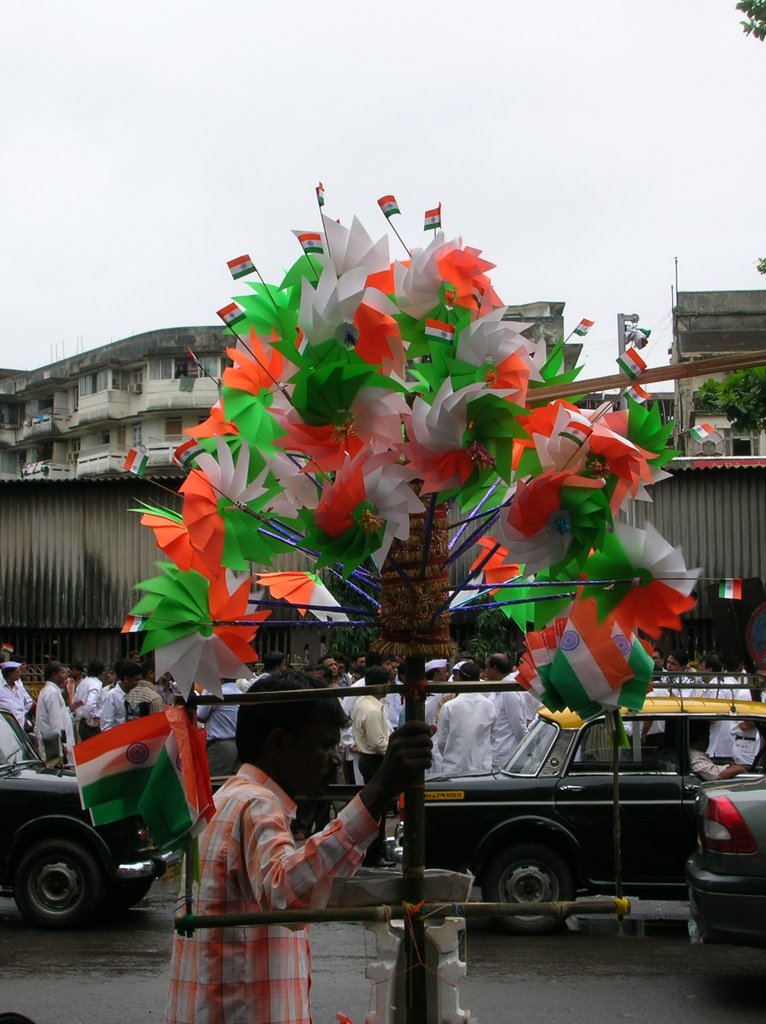
There was tight security at Grant Road station with lots of policemen at the entrances. The trains were moderately full. People had small tri-colored flags pinned onto the shirts on their chests. Children were carrying flags and also tri-colored pinwheels.

On my way to the WSD kennels, I passed the Dhobi Ghat (at Mahalakshmi). For them it was a normal working day and they were busy going about washing the clothes in the little washing place compartments. Some dhobis had flags tied to the handles of their cycles carrying big bundles of clothes brought in for washing and ironing. I could hear the sound of patriotic songs like Meri Desh Ki Dharti coming from a loudspeaker inside the Dhobi Ghat. In the slum outside the kennels, all the houses had put up paper or plastic flags. One flag was already hoisted on a make shift pole and another was being hoisted as I was passing. The resident had worn a Gandhi topi specifically for the purpose. As the kennels are located in the premises of the BMC Dog License Department, a flag had already been hoisted there. Many taxis had flags on their dashboards. The Ganapati Idol makers too had put up flags in their tents and I could see that they had finished coloring many of the Ganapati idols.

All offices have a holiday on Independence Day but I could see uniformed school children on their way back home after the attending the Independence Day function in their schools. BEST bus services were few as any other holiday but the trains were full of people going out to visit relatives and friends.

Independence Day - Vision Animals 2025

Hindustan Times had asked me to write an article on my vision of how animals would be treated in India in 2025. It has appeared today in the special Independence Day supplement but has been drastically chopped. Here is the full version…

“The greatness of a nation and its moral progress can be judged by the way its animals are treated”. This oft-repeated quote made by Gandhiji sums up my vision of how animals should be treated in the year 2025. In order to achieve this, I hope that there is a drastic change in the attitudes of municipal and police officials, politicians and bureaucrats who need to look at animal issues with compassion and rationale. The common man though will continue to be compassionate towards animals just as our culture and values teach us to be.

Sensitizing children about animal welfare through the education sector can achieve a lot. I hope that awareness on animal welfare issues would be a part of environmental education in schools and colleges and by 2025 there would be many animal lovers who would have graduated out of colleges and universities offering courses on animal welfare, stray animal management, farm animal welfare and NGO management.

Veterinary education in the country needs to keep updating and incorporating changes and breakthroughs in practices, methods and technology taking place in the world. Newer subjects that deal with specializations like ophthalmology, dentistry and cardiology and specialization in the treatment of birds and wildlife need to be introduced in the curriculum. Courses with alternative medicine therapies like homeopathy, ayurveda, acupressure and acupuncture (all for animals) need to be introduced and institutionalized so that lakhs of animals are benefited.

Animal cruelty was thought to be an important issue by our lawmakers even in 1960 and so they framed The Prevention Of Cruelty to Animals Act. Sixty-five years later, I hope that this act, which is obsolete today, would have got upgraded and toughened so as to give it more teeth such that people would think twice before inflicting cruelty on any animal.

Though urban Indian cities have stray animals today, their population would decrease by 2025. This would happen if the municipal authorities implemented a proper garbage management plan and invested enough in basic infrastructure (land for more sterilization centers, animal shelters (Mumbai has none today), animal hospitals etc) and in recurring expenditure (sterilization programme) whilst partnering with professionally run animal welfare NGOs. This would reap the benefits of a decreased stray animal population and more importantly elimination of human rabies in urban areas and a drastic decrease in rural areas.

I am sure that by 2025 more and more people will keep pets, though the trend of keeping more dogs than cats will continue. I also hope that more people who keep pets would adopt it from an animal welfare organisation like The Welfare of Stray Dogs (WSD) instead of buying it from a breeder. There also needs to be stringent laws incorporated in The Prevention Of Cruelty to Animals Acts, 1960 for breeders with clauses of yearly licensing and monitoring.

I also hope that there would be more responsible pet ownership displayed, people would not abandon their pets and sterilizing them would be made mandatory. I hope that by 2025 there are no societies that say no pets allowed or no pets in lifts and more and more restaurants, hotels and shops allow pets to go in with their owners.

I also hope that our technological advances would make way to minimize research on animals and tissue culture meat would replace meat from slaughtered animals.

Saturday, August 05, 2006

The Ganpati Idol Makers


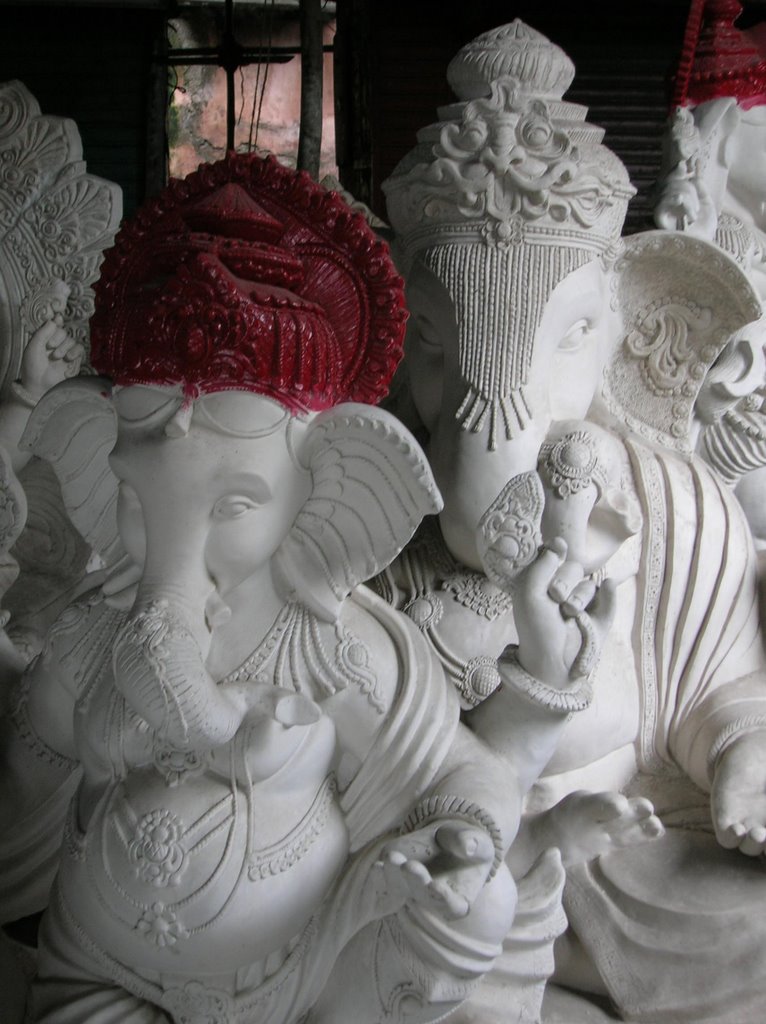
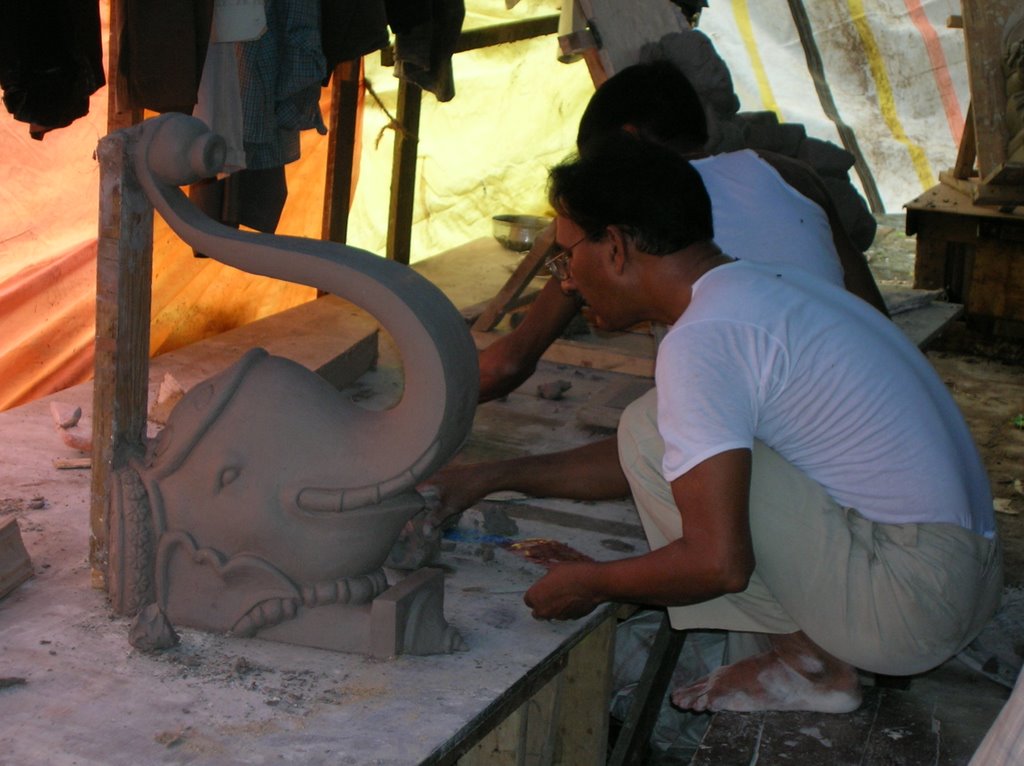
Walk around Chinchpokli, Lalbag and Parel in Bombay during July or August (two months before Ganesh Chaturthi) and you will see lots of small and big ‘karkhane’ or workshops in every lane or as one would say in Marathi ‘gallo gallit’. All these karkhane spring up under tents with lots of plastic sheets to shelter them from the rains where craftsmen toil all day into the night making Ganpati idols of different sizes.

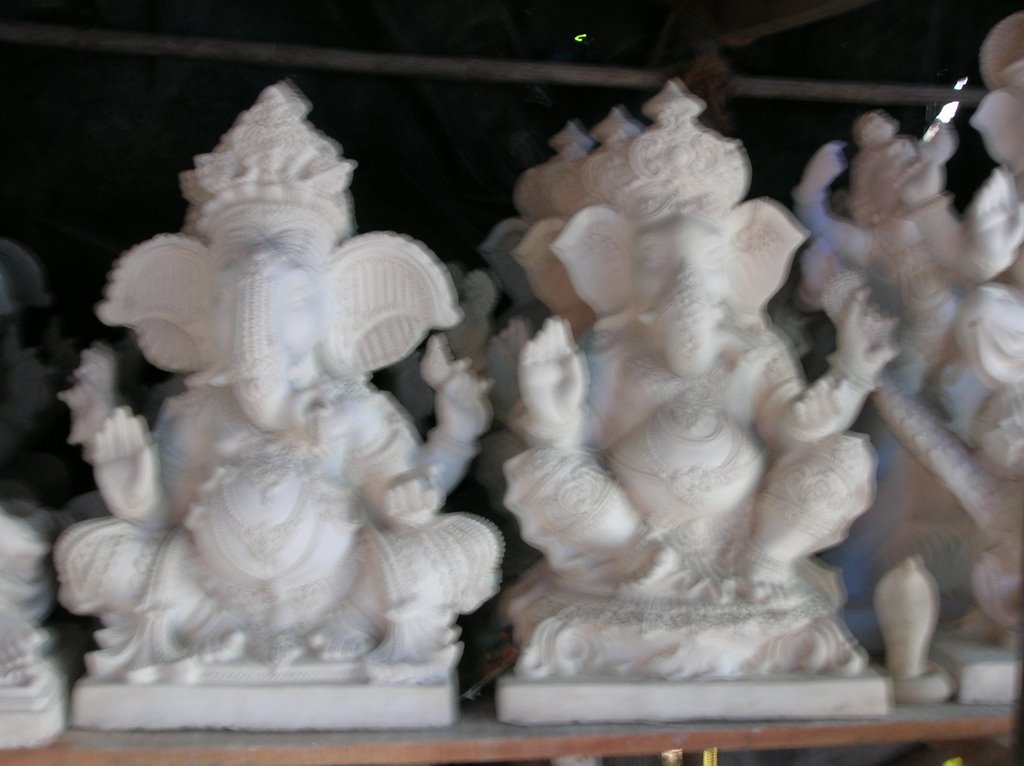
I visited one such ‘workshop’ where I spoke to Surve and Sutardekar who were toiling hard making the Ganpati statues. The statues are made either of ‘mati’ (Soil) or of Plaster of Paris. It takes two days to make a ‘mati’ statue and around one month to dry it. But the POP statue can be made in two hours and dries in 2 days. (They just make a mould and they can keep making many) Their workshop makes around 300-400 statues in the season, which begins 2-3 months before Ganesh Chaturthi. This year Ganesh Chaturthi falls on August 27.

Most of the craftsmen are from the Konkan area. Surve and Satardekar were from Sawantwadi and Malvan respectively. Their colleague wants to say something and they immediately taunt him in Marathi, “ Look at him, just come from the village two days ago and has already started chatting up”. Many of the craftsmen are relatives and friends who are called from their villages for additional help specifically during the season.

People also book idols according to the size and material they want used. The already booked idols have a yellow tag put on them and I could see many such yellow tags on many of the Ganpatis.

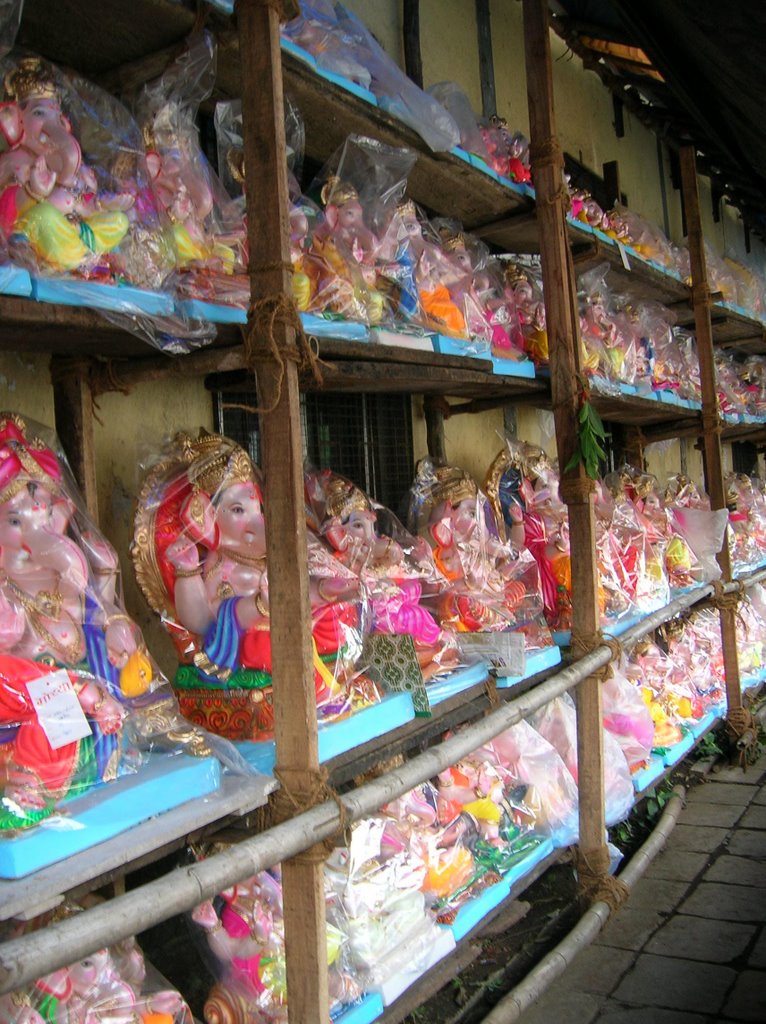
Walking down to the other side of Chinchpokli bridge, I see many Ganpati idols, which are already painted, wrapped in plastic and arranged on shelves. Samir Mangaonkar who is into the printing business owns this shop. He takes time off from his business and concentrates on Ganpati idols. He goes to Pen (Pen has the biggest Ganpati idol making industry), selects the idols, gets them transported and sells them here. He gets a license from the BMC to set up the tent.

Thus the Ganpati idol industry provides a livelihood to so many people.